Pain quality helps describe the problem, but does not diagnose nerve damage. This page helps you connect sensations with their distribution, associated findings and assessment.
1 · Quick understanding
Peripheral nerve problems can cause burning or sharp pain, tingling, numbness and pain from light touch. Different sensory functions may be affected differently.
Sensation quality helps describe pain; it does not diagnose nerve injury or measure dopamine.Read diagram text
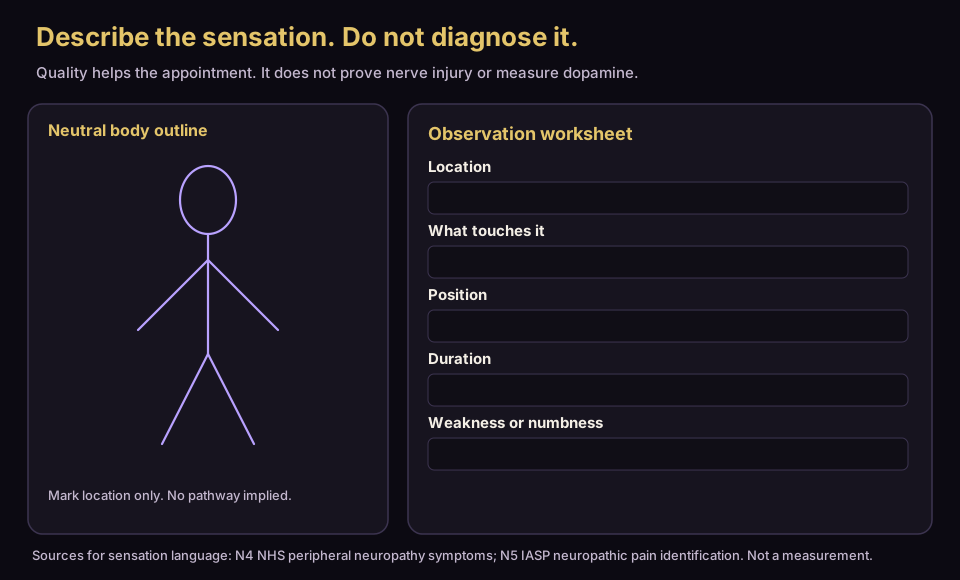
Neutral body outline for marking location only. No nerve pathway is drawn.
Fields: location; what touches it; position; duration; weakness or numbness.
Sensation quality helps describe pain. It does not diagnose nerve injury and it does not measure dopamine.
Language orientation: N4, N5.
2 · Possible explanations
Neuropathic pain means pain caused by disease or injury of the somatosensory nervous system. Assessment considers the history, a plausible anatomical distribution, examination findings and relevant investigations.
Mark affected areas on a simple body outline. Record whether contact, position or activity changes symptoms, and whether there is weakness or loss of sensation. Ask for a neurological and pain assessment.
4 · Treatment logic
Ask what the pain treatment is intended to improve and how benefit, sleepiness and everyday function will be reviewed. A cause investigation and symptom-relief plan are separate questions worth answering.
5 · Deeper explanation
Pain intensity and precise localization do not measure electrical charge, dopamine levels or progressive nerve injury. Proposed explanations should remain labelled as hypotheses until supported.
6 · Evidence and onward routes
Clinical information: N4N5. These are institutional explainers; the page is sourced, not independently medically reviewed.
For abrupt new neurological symptoms, use urgent medical assessment rather than this reading route.
Useful questions
Does the pattern fit a nerve, nerve root or another mechanism?
Which findings support that interpretation and what remains uncertain?
Uncertainty
Sensations can overlap between nerve pain and other pain mechanisms. This page provides a description route, not a diagnosis.
Sources cited
N4 NHS — Peripheral neuropathy symptoms link(Webpage read; not an independent systematic review)
N5 IASP — Identifying neuropathic pain in the clinic link(Webpage read; not an independent systematic review)