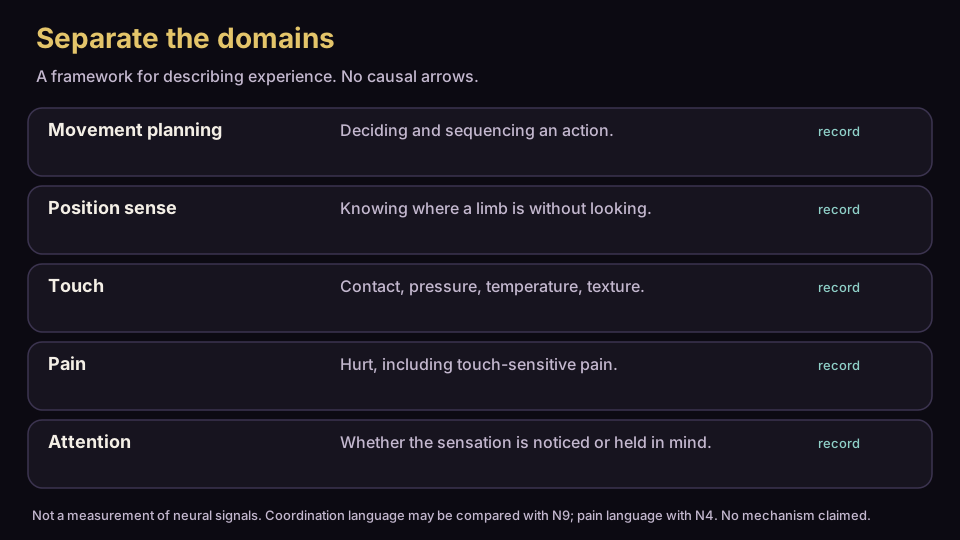
Pain, pressure, knowing where a limb is and coordinating an action are different descriptions. Record them separately so that an appointment can address each difficulty.
1 · Quick understanding
Sensory neuropathy can impair awareness of hand or foot position and contribute to poor balance or coordination. That is one possible explanation, not the only one.
A framework for describing experience, not a measurement of neural signals or an established mechanism.Read diagram text
Record separately: movement planning; position sense; touch; pain; attention.
Framework for describing experience. Not a measurement of neural signals and not an established mechanism.
2 · Possible explanations
Developmental coordination disorder can affect everyday coordination. A new or changing movement problem also needs assessment for other neurological causes rather than an assumed developmental explanation.
Describe one ordinary task: what you intended, what visibly happened, and what you could feel. Ask for position-sense, strength and coordination assessment. Do not use unsafe balance challenges as home tests.
4 · Treatment logic
Physiotherapy and occupational therapy can help with function and practical task adaptations. Support should address the actual difficulties identified.
A patient can report intense sensation alongside unclear movement feedback. That observation does not, by itself, establish a neurotransmitter deficit, blocked telemetry or a specific nerve lesion.
6 · Evidence and onward routes
Clinical information: N4N9. These are institutional explainers; the page is sourced, not independently medically reviewed.
For abrupt new neurological symptoms, use urgent medical assessment rather than this reading route.
Useful questions
Which sensory functions have been examined separately?
What adaptation would make this task more manageable now?
Uncertainty
This distinction is a useful observation framework, not a validated diagnostic test.
Sources cited
N4 NHS — Peripheral neuropathy symptoms link(Webpage read; not an independent systematic review)
N9 NHS — Adult developmental coordination disorder link(Webpage read; not an independent systematic review)