All diagrams in energy and cellular support
Energy supply and neuronal demand
Neurons use energy to maintain gradients and support signalling. This is normal physiology, not proof of an energy defect in ADHD.
Energy supply and neuronal demand
Scoped educational mechanism
Open larger diagram · Full-size PNG · Diagram page
Read the diagram explanation and sources
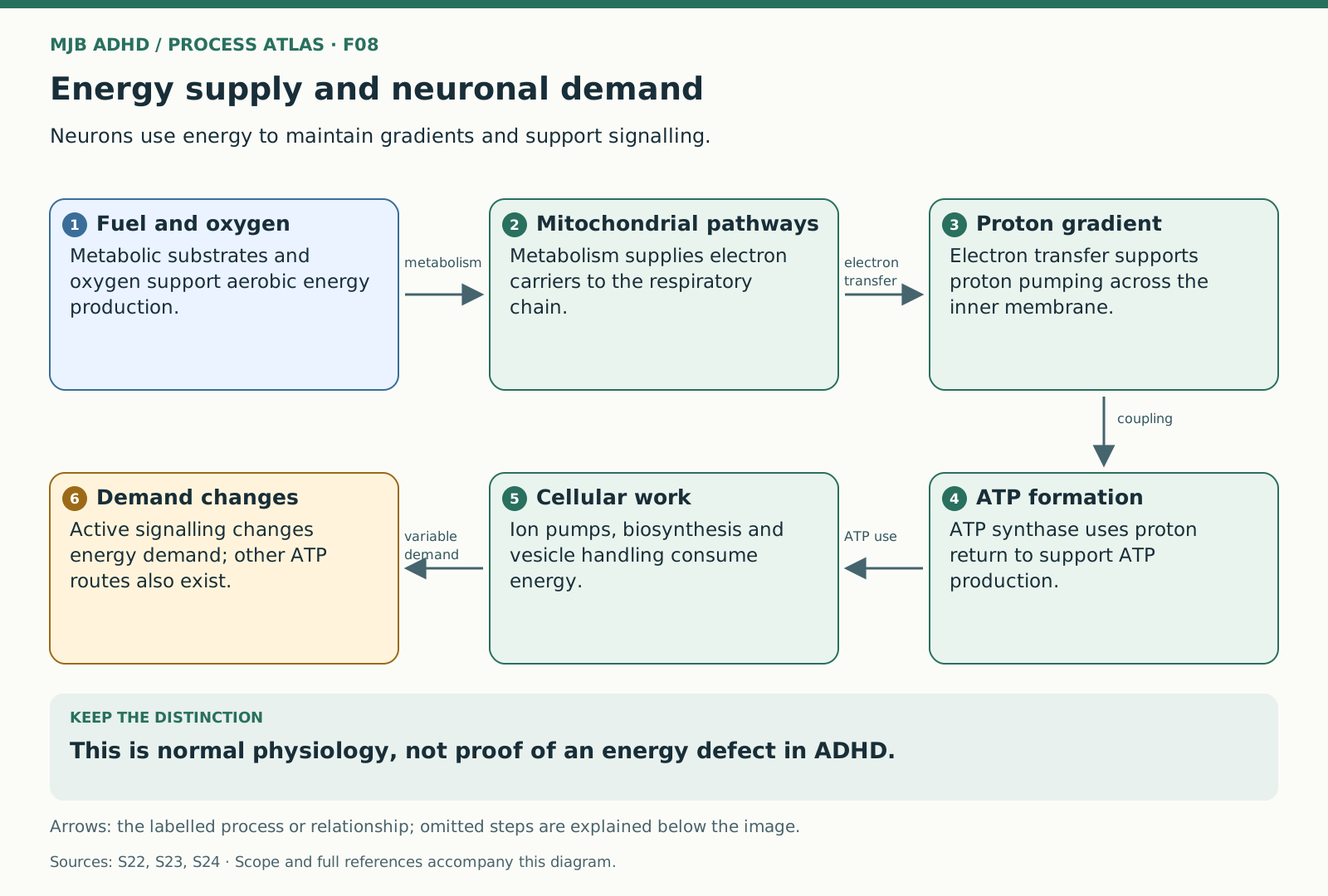
Aerobic metabolism supplies reducing equivalents to the respiratory chain. Proton pumping and ATP synthase couple electron transfer to ATP generation. Cells use ATP for ion homeostasis, biosynthesis and many aspects of signalling. Glycolysis also produces ATP, and fuel contributions differ with cell and context. Mitochondria do not directly manufacture dopamine. An explanation of energy supply and demand does not establish mitochondrial dysfunction or an energy deficit in an individual with ADHD.
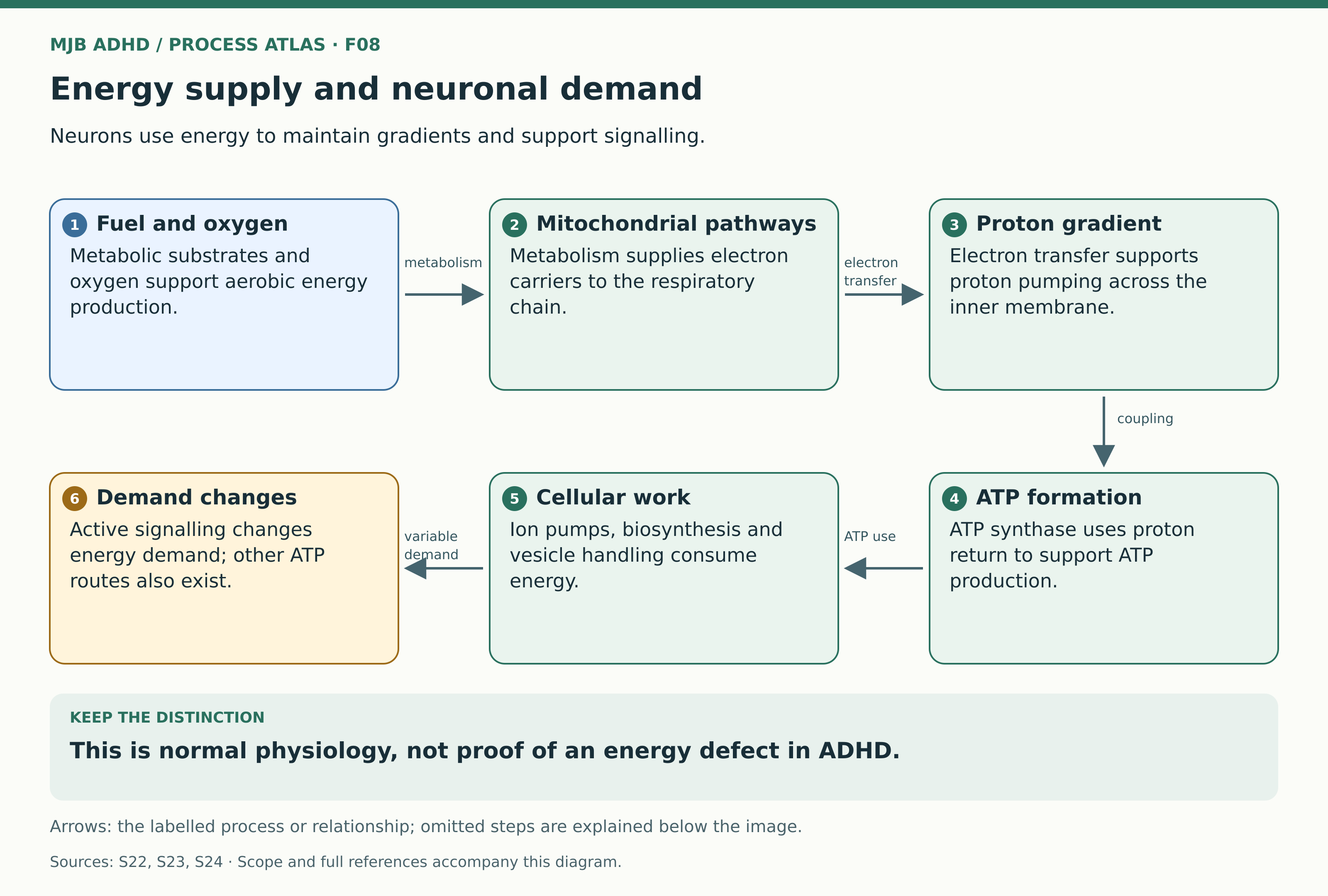
- Fuel and oxygen → Mitochondrial pathways: metabolism
- Mitochondrial pathways → Proton gradient: electron transfer
- Proton gradient → ATP formation: coupling
- ATP formation → Cellular work: ATP use
- Cellular work → Demand changes: variable demand
What the diagram shows
Aerobic metabolism supplies reducing equivalents to the respiratory chain. Proton pumping and ATP synthase couple electron transfer to ATP generation. Cells use ATP for ion homeostasis, biosynthesis and many aspects of signalling. Glycolysis also produces ATP, and fuel contributions differ with cell and context. Mitochondria do not directly manufacture dopamine. An explanation of energy supply and demand does not establish mitochondrial dysfunction or an energy deficit in an individual with ADHD.