All diagrams in context and arousal
Dopamine and noradrenaline projection systems
Selected projection examples: schematic routes, not anatomical positions. Projection systems are not one-to-one maps from a transmitter to a symptom.
Dopamine and noradrenaline projection systems
Scoped educational mechanism
Open larger diagram · Full-size PNG · Diagram page
Read the diagram explanation and sources
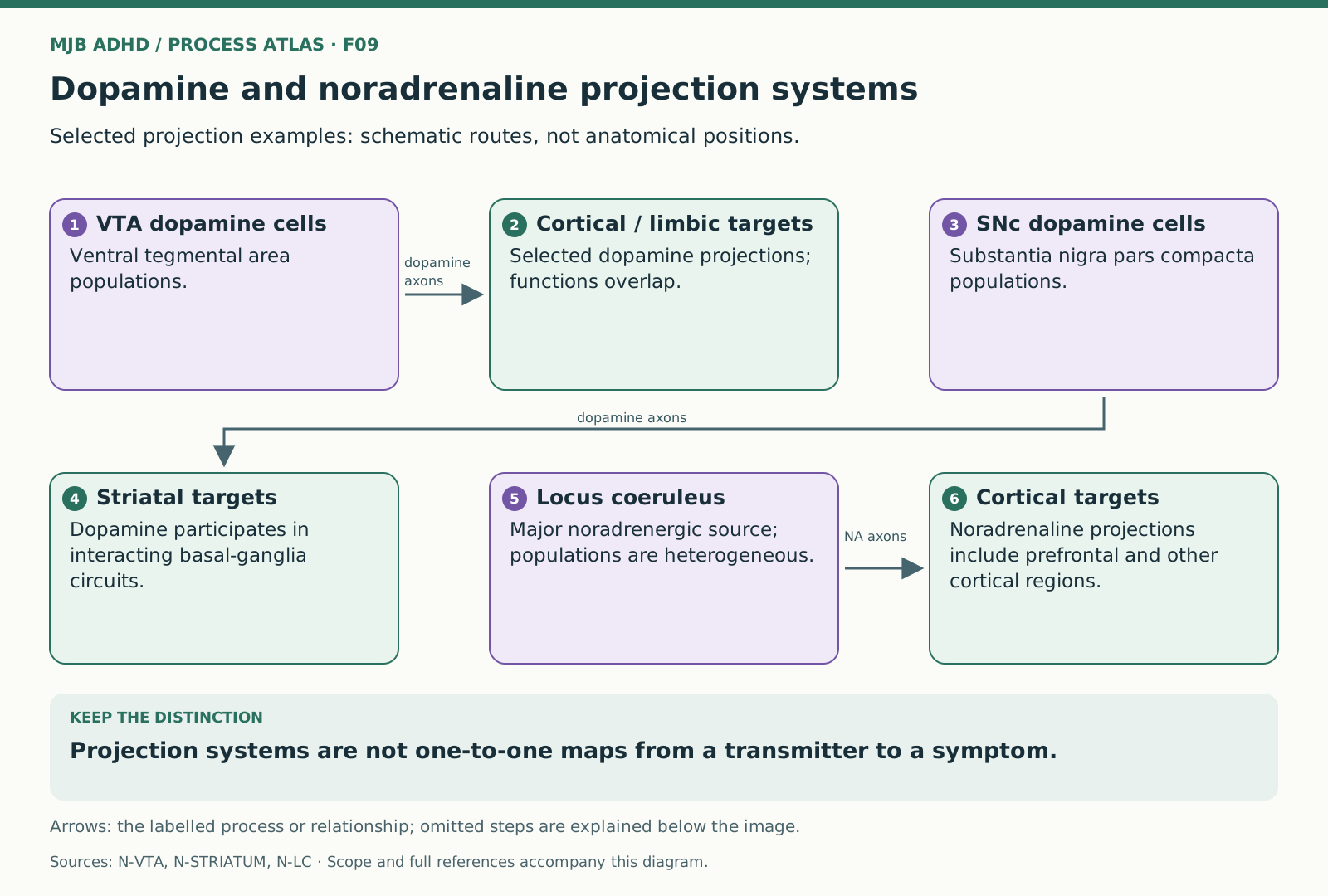
Different dopamine cell populations project to cortex, limbic regions and striatum. Locus-coeruleus populations provide noradrenergic projections to cortical and other targets and are not a completely uniform system. This deliberately non-anatomical route map names selected examples, not every origin, target or collateral. Tracing studies cited include rodent and primate work; the simplified route names do not imply the complete architecture is identical across species or that one pathway uniquely causes an ADHD symptom.
- VTA dopamine cells → Cortical / limbic targets: dopamine axons
- SNc dopamine cells → Striatal targets: dopamine axons
- Locus coeruleus → Cortical targets: NA axons
What the diagram shows
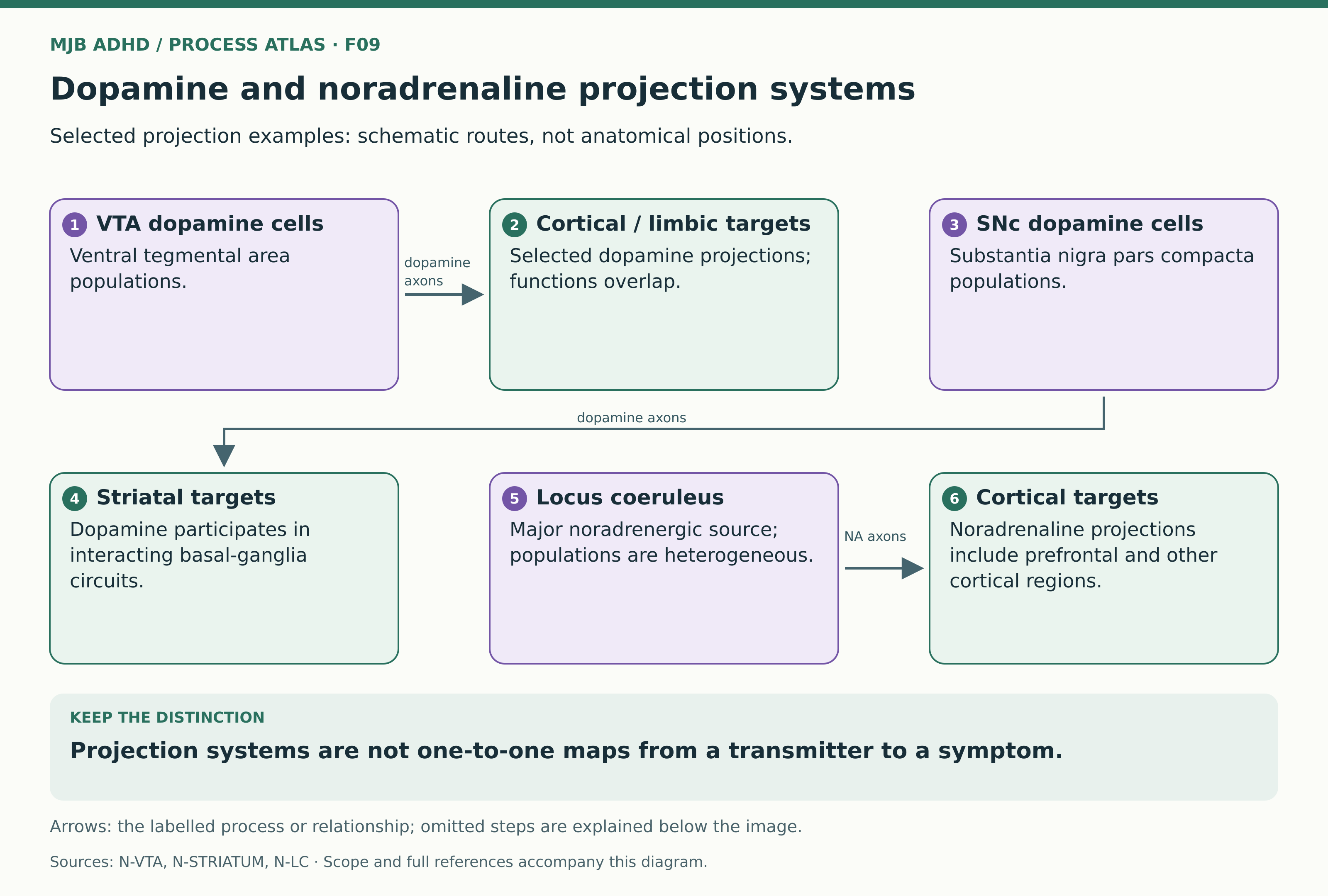
Different dopamine cell populations project to cortex, limbic regions and striatum. Locus-coeruleus populations provide noradrenergic projections to cortical and other targets and are not a completely uniform system. This deliberately non-anatomical route map names selected examples, not every origin, target or collateral. Tracing studies cited include rodent and primate work; the simplified route names do not imply the complete architecture is identical across species or that one pathway uniquely causes an ADHD symptom.