All diagrams in synapses and receptor signalling
GABA transmission and inhibition
GABA responses depend on receptor type and the ion gradient. GABA is usually inhibitory in mature contexts; that is not an absolute rule.
GABA transmission and inhibition
Scoped educational mechanism
Open larger diagram · Full-size PNG · Diagram page
Read the diagram explanation and sources
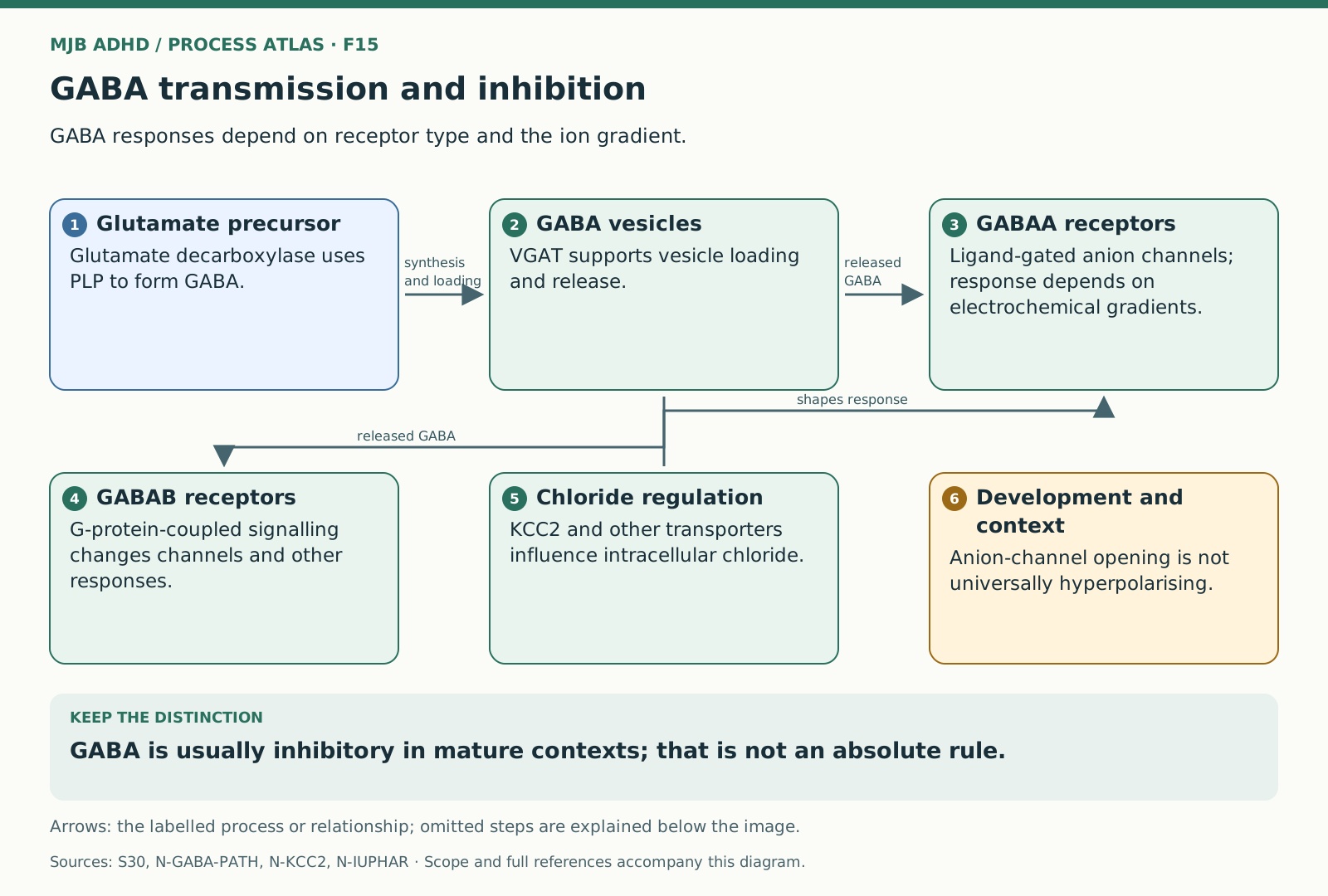
GABA is produced from glutamate and released from vesicles. GABAA receptors conduct anions, so the effect depends on chloride/bicarbonate gradients and membrane potential, not just the name of the transmitter. GABAB receptors act through G proteins. Developmental induction of KCC2 contributes to more hyperpolarising GABAA responses in studied neurons. A depolarising response and net network excitation are also not automatically identical. The diagram makes no individual ADHD or developmental diagnosis.
- Glutamate precursor → GABA vesicles: synthesis and loading
- GABA vesicles → GABAA receptors: released GABA
- GABA vesicles → GABAB receptors: released GABA
- Chloride regulation → GABAA receptors: shapes response
What the diagram shows
GABA is produced from glutamate and released from vesicles. GABAA receptors conduct anions, so the effect depends on chloride/bicarbonate gradients and membrane potential, not just the name of the transmitter. GABAB receptors act through G proteins. Developmental induction of KCC2 contributes to more hyperpolarising GABAA responses in studied neurons. A depolarising response and net network excitation are also not automatically identical. The diagram makes no individual ADHD or developmental diagnosis.