All diagrams in supply, synthesis and cofactors
Serotonin supply and transmission
Brain and peripheral serotonin are separate compartments. Serotonin is not simply a happiness chemical; tissue context matters.
Serotonin supply and transmission
Scoped educational mechanism
Open larger diagram · Full-size PNG · Diagram page
Read the diagram explanation and sources
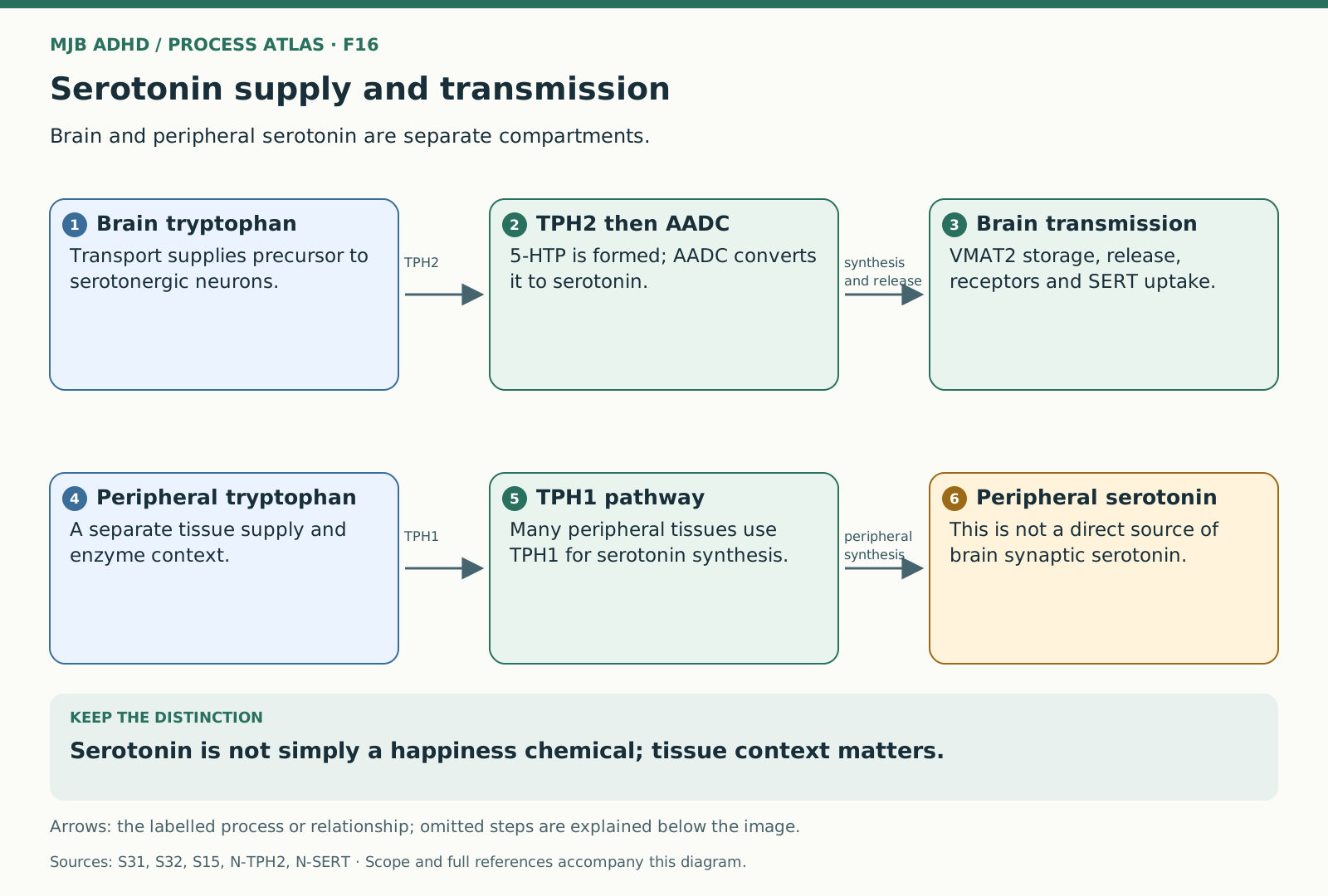
Tryptophan hydroxylation requires iron, BH4 and oxygen. TPH2 is the key neuronal isoform in brain serotonin synthesis, while TPH1 operates in many peripheral serotonin-producing tissues. AADC then forms serotonin, which is stored and released in the neuronal compartment. SERT-dependent uptake contributes to clearance. These compartments should not be joined by an arrow suggesting peripheral serotonin directly supplies brain synapses. The pathways alone do not predict mood or treatment response.
- Brain tryptophan → TPH2 then AADC: TPH2
- TPH2 then AADC → Brain transmission: synthesis and release
- Peripheral tryptophan → TPH1 pathway: TPH1
- TPH1 pathway → Peripheral serotonin: peripheral synthesis
What the diagram shows
Tryptophan hydroxylation requires iron, BH4 and oxygen. TPH2 is the key neuronal isoform in brain serotonin synthesis, while TPH1 operates in many peripheral serotonin-producing tissues. AADC then forms serotonin, which is stored and released in the neuronal compartment. SERT-dependent uptake contributes to clearance. These compartments should not be joined by an arrow suggesting peripheral serotonin directly supplies brain synapses. The pathways alone do not predict mood or treatment response.