All diagrams in synapses and receptor signalling
Astrocytes and transmitter recycling
Astrocytes support transmitter handling and the cellular environment. Amino-acid recycling is different from recycling a vesicle membrane.
Astrocytes and transmitter recycling
Scoped educational mechanism
Open larger diagram · Full-size PNG · Diagram page
Read the diagram explanation and sources
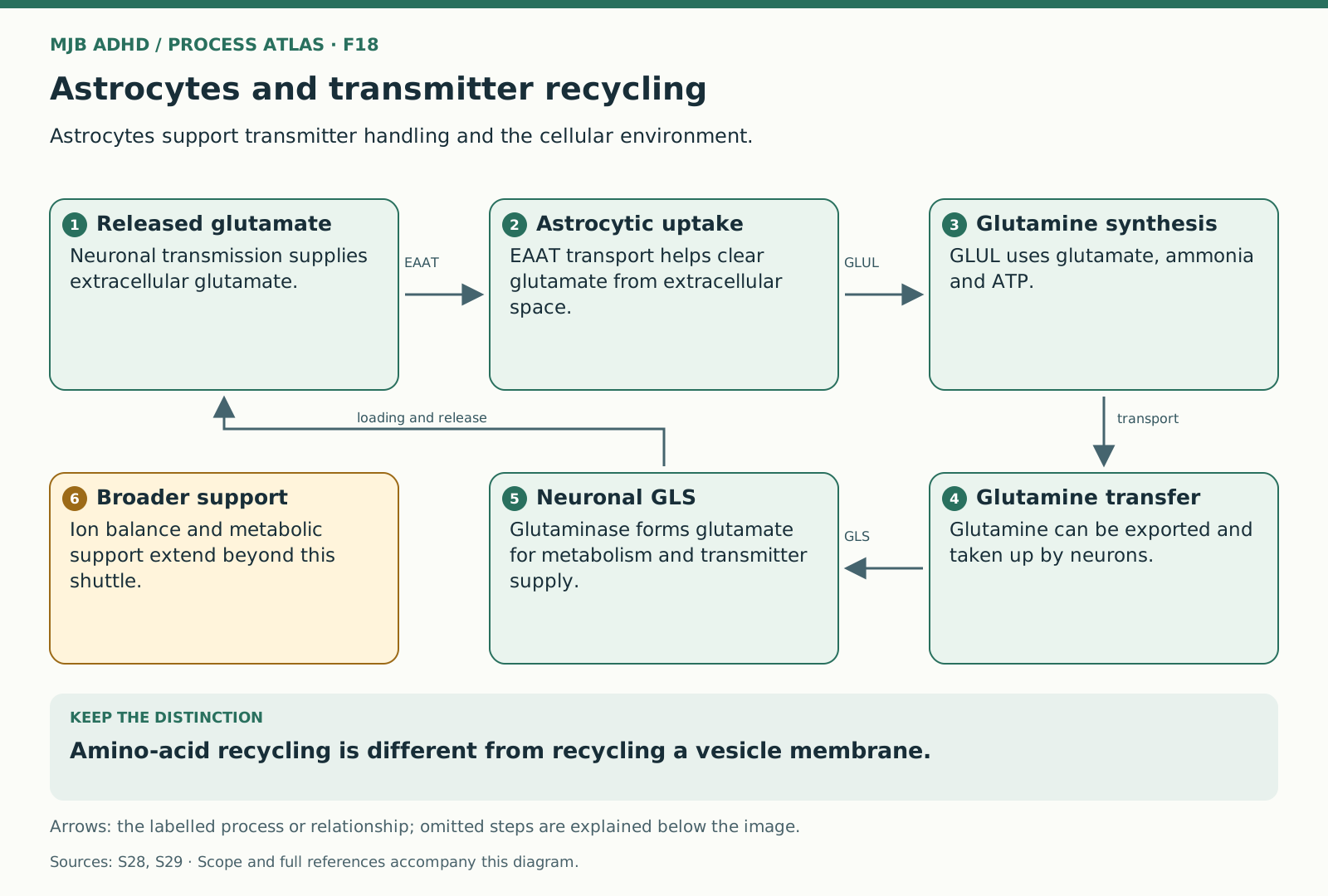
The glutamate–glutamine shuttle links astrocytic uptake and glutamine synthesis with neuronal glutamine uptake and glutaminase activity. This is one important route, not the entire metabolism of either cell. Astrocytes also support the extracellular environment and exchange metabolic substrates. The figure does not designate a lactate shuttle as the only neuronal fuel route, identify a patient defect or equate amino-acid recycling with synaptic-vesicle recycling.
- Released glutamate → Astrocytic uptake: EAAT
- Astrocytic uptake → Glutamine synthesis: GLUL
- Glutamine synthesis → Glutamine transfer: transport
- Glutamine transfer → Neuronal GLS: GLS
- Neuronal GLS → Released glutamate: loading and release
What the diagram shows
The glutamate–glutamine shuttle links astrocytic uptake and glutamine synthesis with neuronal glutamine uptake and glutaminase activity. This is one important route, not the entire metabolism of either cell. Astrocytes also support the extracellular environment and exchange metabolic substrates. The figure does not designate a lactate shuttle as the only neuronal fuel route, identify a patient defect or equate amino-acid recycling with synaptic-vesicle recycling.