All diagrams in context and arousal
Adrenal hormones: two tissue compartments
Cortisol and adrenaline come from different adrenal tissues. Peripheral stress hormones cannot be read as a brain dopamine measurement.
Adrenal hormones: two tissue compartments
Scoped educational mechanism
Open larger diagram · Full-size PNG · Diagram page
Read the diagram explanation and sources
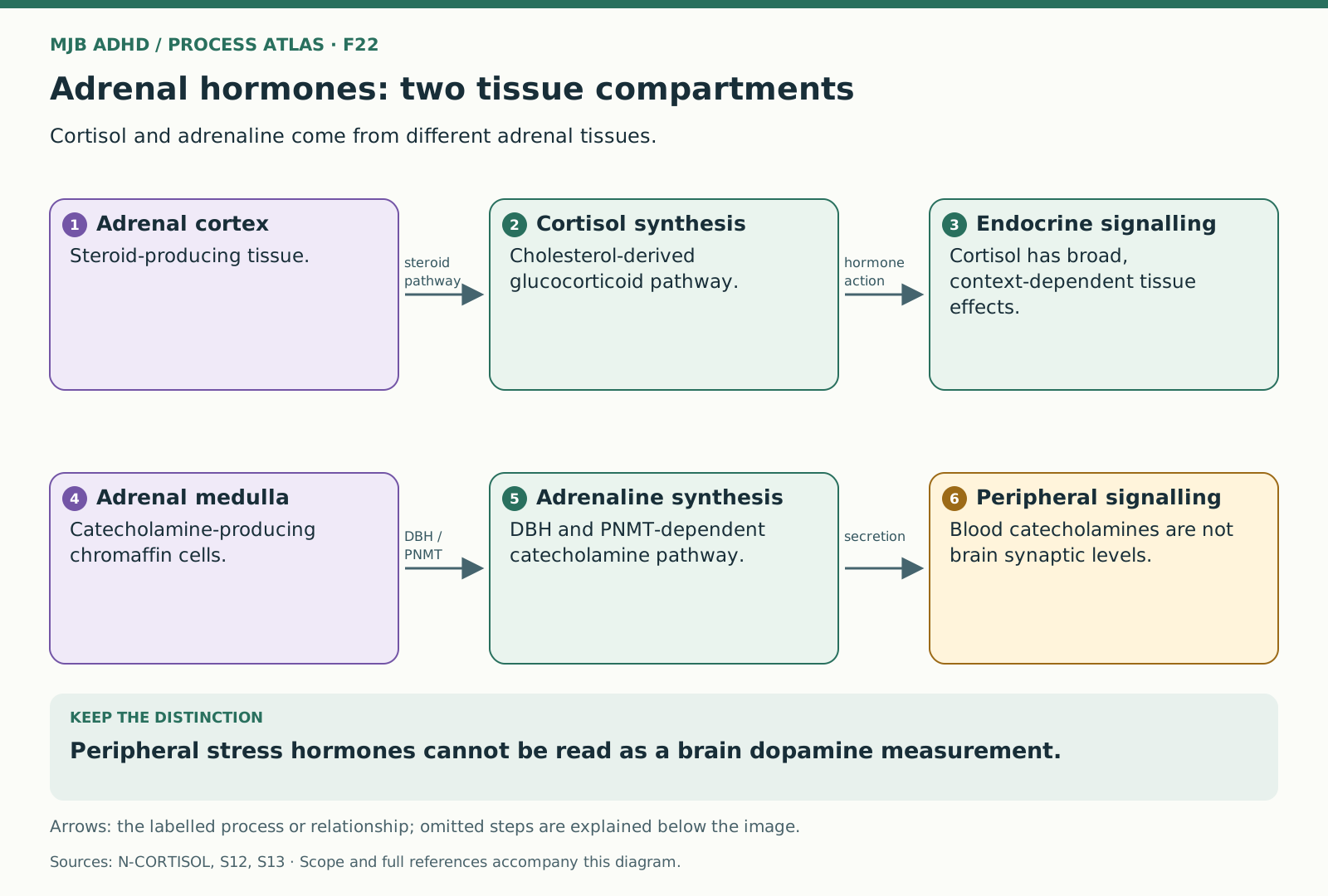
The adrenal cortex makes cortisol through steroid biosynthesis, while medullary chromaffin cells make catecholamines through enzymes including DBH and PNMT. Their tissue origins, chemistry and regulation differ. The simplified lanes illustrate these distinctions, not the complete HPA or autonomic feedback networks. Blood catecholamine concentrations cannot be equated with transmitter levels at a brain synapse, and the diagram does not demonstrate a cortisol abnormality or a specific stress cause of ADHD.
- Adrenal cortex → Cortisol synthesis: steroid pathway
- Cortisol synthesis → Endocrine signalling: hormone action
- Adrenal medulla → Adrenaline synthesis: DBH / PNMT
- Adrenaline synthesis → Peripheral signalling: secretion
What the diagram shows
The adrenal cortex makes cortisol through steroid biosynthesis, while medullary chromaffin cells make catecholamines through enzymes including DBH and PNMT. Their tissue origins, chemistry and regulation differ. The simplified lanes illustrate these distinctions, not the complete HPA or autonomic feedback networks. Blood catecholamine concentrations cannot be equated with transmitter levels at a brain synapse, and the diagram does not demonstrate a cortisol abnormality or a specific stress cause of ADHD.