All diagrams in supply, synthesis and cofactors
TH reaction and regulation
Tyrosine hydroxylase chemistry: the reaction and its controls are separate. This is a cytosolic reaction; the arrow is not a direct route to a symptom.
TH reaction and regulation
Scoped educational mechanism
Open larger diagram · Full-size PNG · Diagram page
Read the diagram explanation and sources
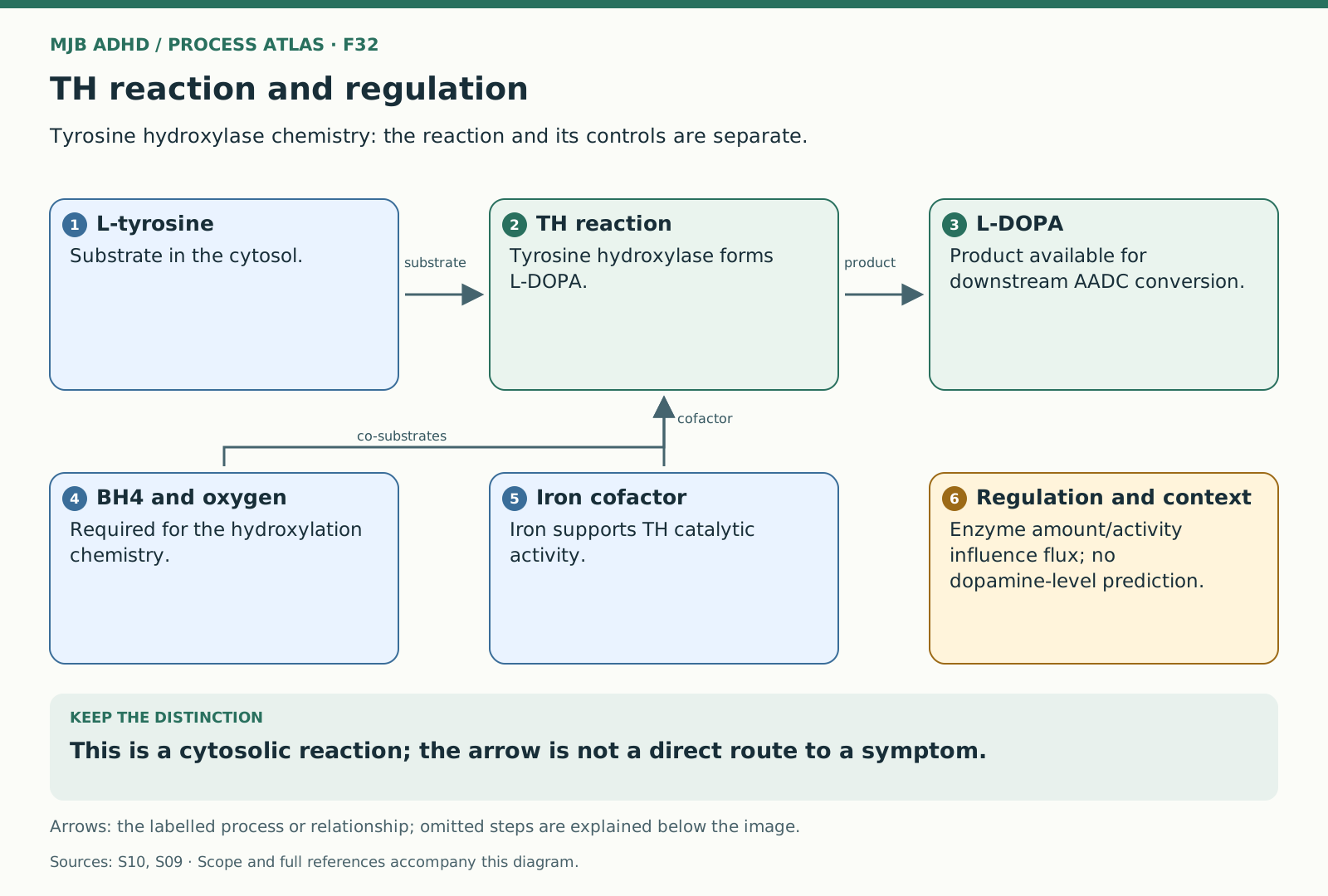
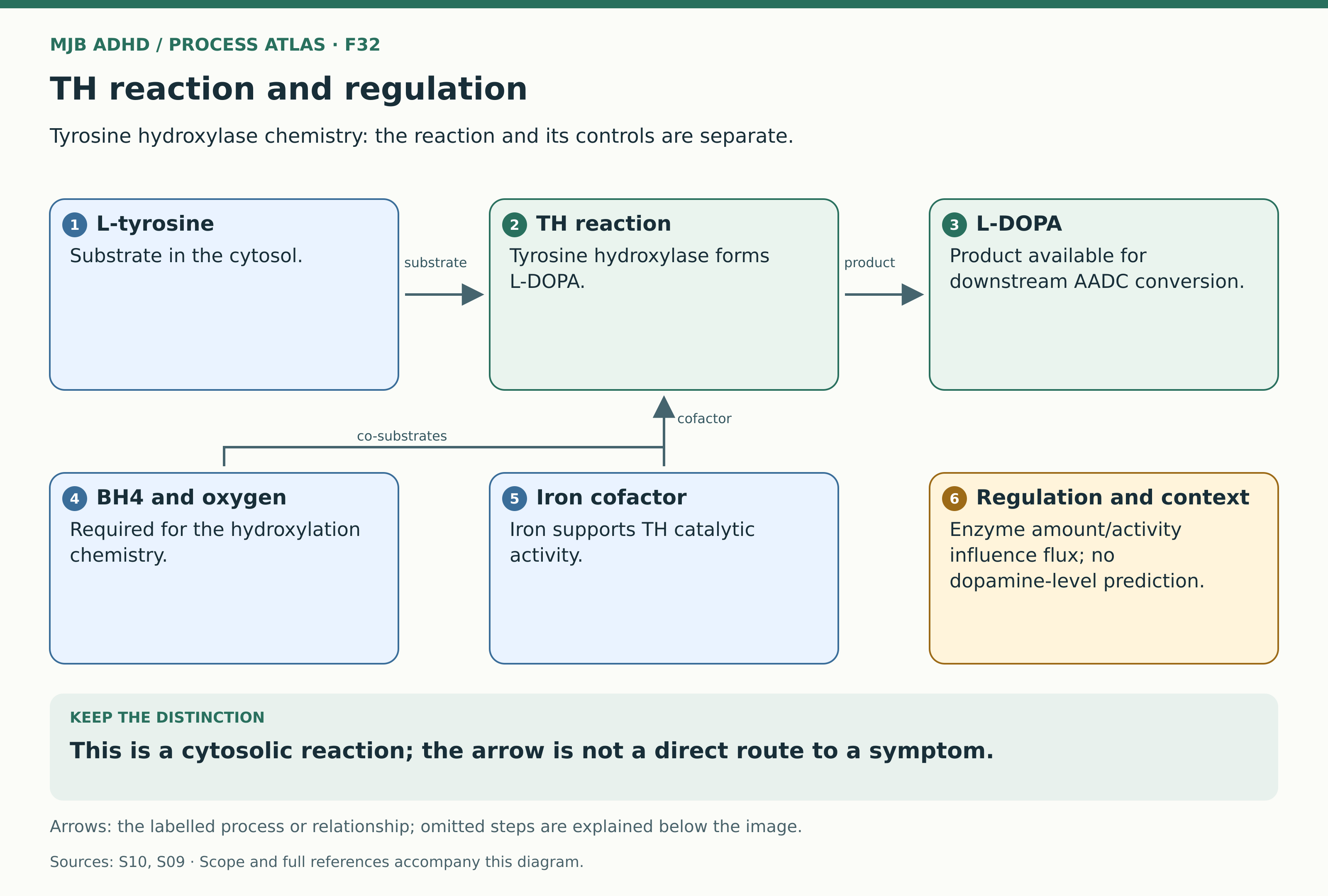
Tyrosine hydroxylase catalyses the rate-limiting hydroxylation step in catecholamine biosynthesis. It uses BH4, iron and oxygen to form L-DOPA in the cytosol. Enzyme activity is regulated, so substrate abundance alone does not determine downstream transmitter availability. Further synthesis, vesicular storage, release and clearance remain necessary. The figure omits full chemical stoichiometry and does not assert a TH defect or predict a therapeutic response.
- L-tyrosine → TH reaction: substrate
- TH reaction → L-DOPA: product
- BH4 and oxygen → TH reaction: co-substrates
- Iron cofactor → TH reaction: cofactor
What the diagram shows
Tyrosine hydroxylase catalyses the rate-limiting hydroxylation step in catecholamine biosynthesis. It uses BH4, iron and oxygen to form L-DOPA in the cytosol. Enzyme activity is regulated, so substrate abundance alone does not determine downstream transmitter availability. Further synthesis, vesicular storage, release and clearance remain necessary. The figure omits full chemical stoichiometry and does not assert a TH defect or predict a therapeutic response.