All diagrams in energy and cellular support
Mitochondrial membrane and respiratory chain
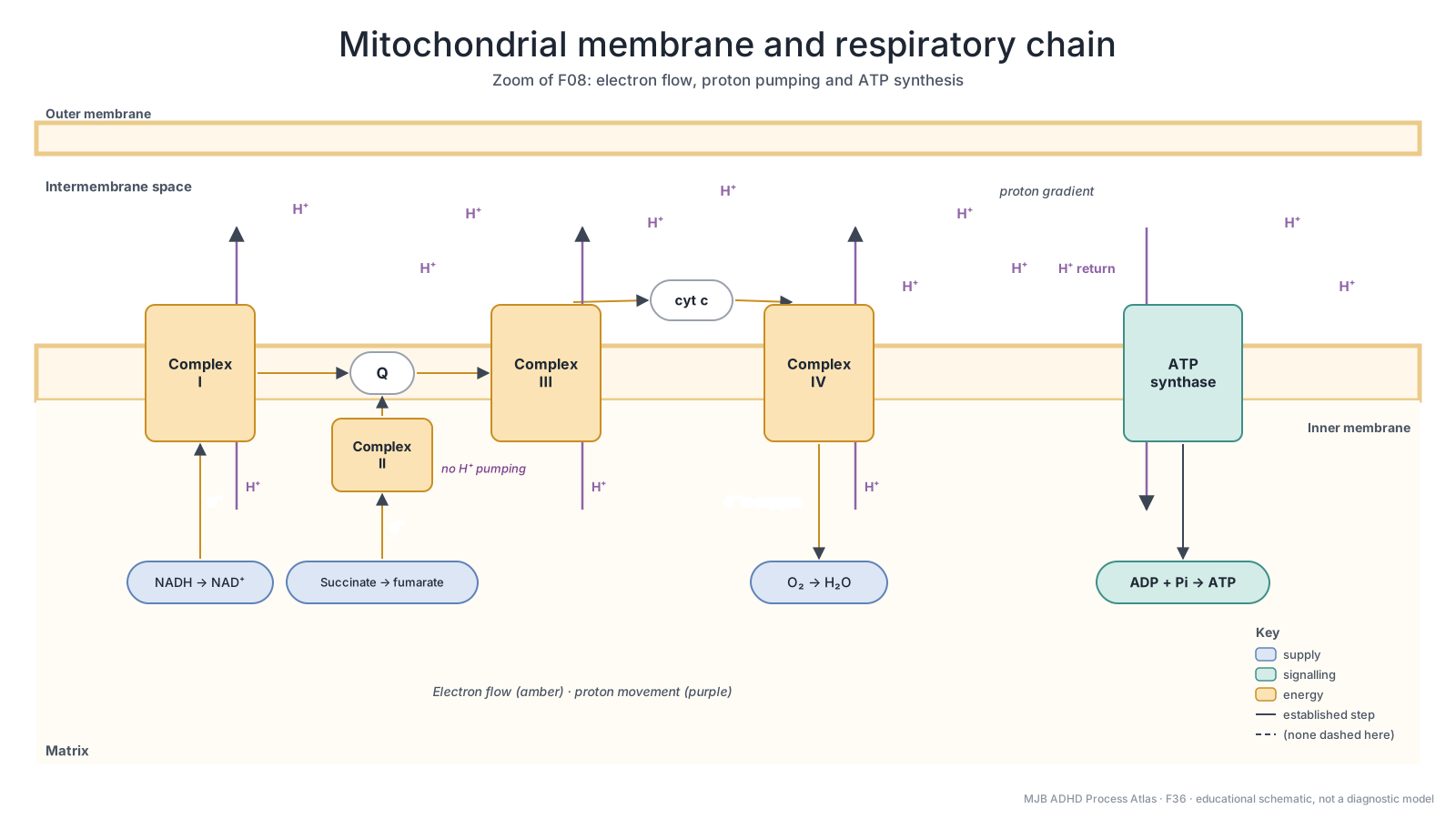
Electrons pass along the respiratory chain while complexes I, III and IV pump protons. Proton return through ATP synthase supports ATP formation. This illustrates general cell physiology; it does not establish an energy defect in a reader.
Mitochondrial membrane and respiratory chain
Established cellular mechanism
Open larger diagram · Full-size PNG · Diagram page
Read the diagram explanation and sources
NADH supplies electrons through complex I, while succinate oxidation supplies electrons through complex II. Ubiquinone transfers electrons to complex III, cytochrome c carries them to complex IV, and oxygen is the final acceptor. Complexes I, III and IV pump protons from the matrix towards the intermembrane space. Complex II is membrane-bound but does not pump protons; its label is placed on the matrix side in this simplified drawing. Proton return through ATP synthase supports ATP formation from ADP and phosphate. The diagram does not establish mitochondrial dysfunction in ADHD.
What the diagram shows
NADH supplies electrons through complex I, while succinate oxidation supplies electrons through complex II. Ubiquinone transfers electrons to complex III, cytochrome c carries them to complex IV, and oxygen is the final acceptor. Complexes I, III and IV pump protons from the matrix towards the intermembrane space. Complex II is membrane-bound but does not pump protons; its label is placed on the matrix side in this simplified drawing. Proton return through ATP synthase supports ATP formation from ADP and phosphate. The diagram does not establish mitochondrial dysfunction in ADHD.