All diagrams in supply, synthesis and cofactors
BH4 hydroxylase recycling and salvage
Hydroxylase recycling and oxidised-BH2 salvage require different enzymes. Quinonoid BH2 and 7,8-BH2 must not be treated as one identical intermediate.
BH4 hydroxylase recycling and salvage
Scoped educational mechanism
Open larger diagram · Full-size PNG · Diagram page
Read the diagram explanation and sources
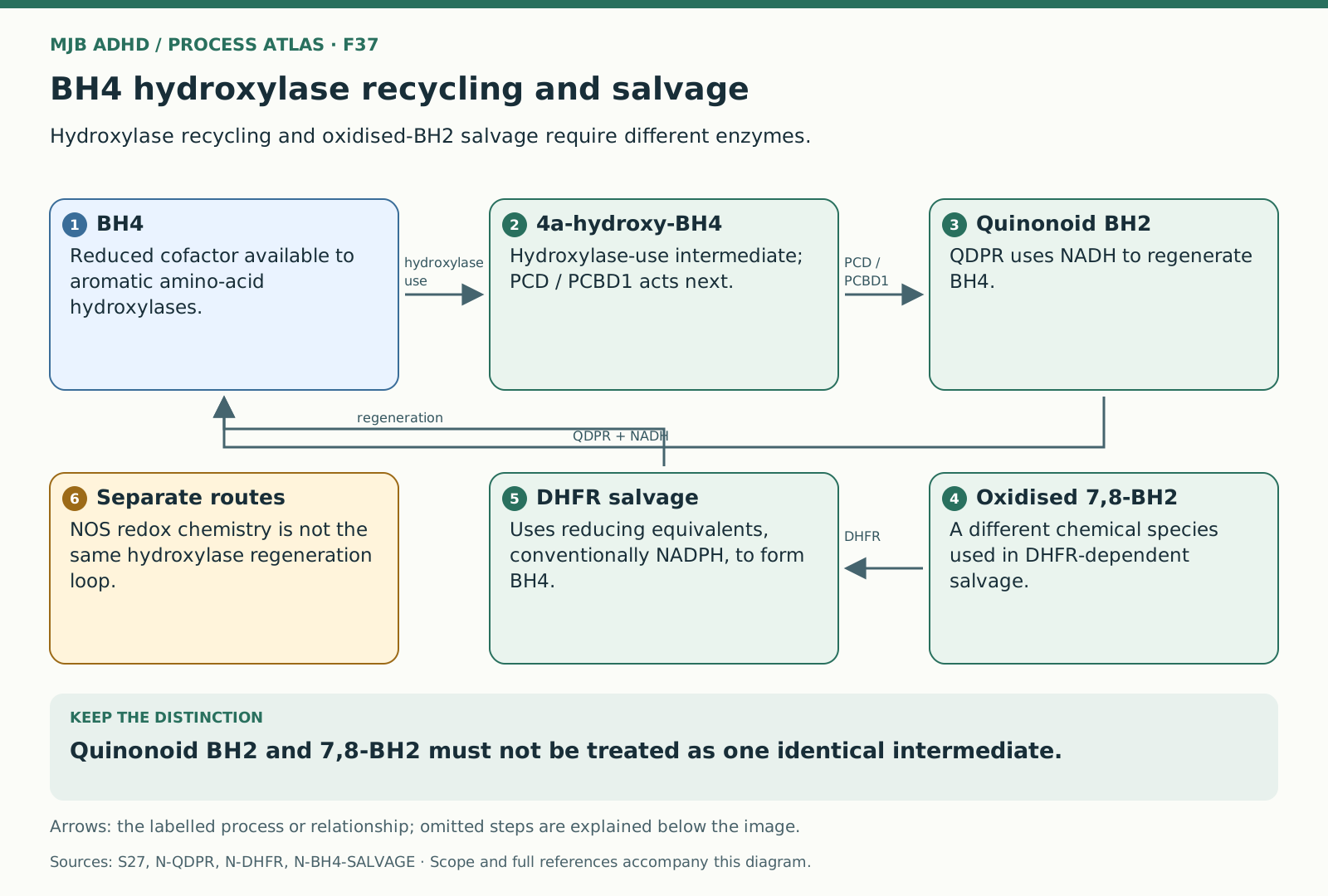
Aromatic amino-acid hydroxylases form 4a-hydroxytetrahydrobiopterin. Pterin-4a-carbinolamine dehydratase produces quinonoid dihydrobiopterin, which QDPR can reduce using NADH to regenerate BH4. Oxidised 7,8-dihydrobiopterin belongs to a different salvage route using DHFR and NADPH. Non-enzymatic rearrangement and intermediate redox chemistry exist but are omitted here rather than drawn as an unverified universal arrow. This is an educational biochemical distinction, not proof of BH4 deficiency or an ADHD mechanism.
- BH4 → 4a-hydroxy-BH4: hydroxylase use
- 4a-hydroxy-BH4 → Quinonoid BH2: PCD / PCBD1
- Quinonoid BH2 → BH4: QDPR + NADH
- Oxidised 7,8-BH2 → DHFR salvage: DHFR
- DHFR salvage → BH4: regeneration
What the diagram shows
Aromatic amino-acid hydroxylases form 4a-hydroxytetrahydrobiopterin. Pterin-4a-carbinolamine dehydratase produces quinonoid dihydrobiopterin, which QDPR can reduce using NADH to regenerate BH4. Oxidised 7,8-dihydrobiopterin belongs to a different salvage route using DHFR and NADPH. Non-enzymatic rearrangement and intermediate redox chemistry exist but are omitted here rather than drawn as an unverified universal arrow. This is an educational biochemical distinction, not proof of BH4 deficiency or an ADHD mechanism.