1. Medication types
Amphetamine-based stimulants
Examples: dexamfetamine, lisdexamfetamine.
Broad mechanism: increase the functional availability of dopamine and noradrenaline. Often particularly useful where the main difficulty is initiation, under-arousal, low drive, poor task-starting, and “I know what to do but cannot begin.”
Strengths: strong effect on task initiation; can help motivation, mental energy and “getting going”; may improve attention, reward salience and throughput.
Limitations: can cause physical tension, appetite loss, sleep issues, agitation or overstimulation; can feel “too sharp” for some people.
Practical note: a strong positive response can suggest that increasing functional catecholamine availability is highly relevant for that person.
Methylphenidate-based stimulants
Examples: methylphenidate immediate-release and modified-release forms.
Broad mechanism: mainly reduces dopamine and noradrenaline reuptake, helping those signals persist longer.
Strengths: can improve focus, task engagement and distractibility; some people find it smoother or easier to tolerate than amphetamine-based options.
Limitations: for some people it improves focus without truly fixing initiation; can still cause appetite suppression, anxiety, crash effects or tension.
Practical note: someone may respond well for attention but still need a different option if the core problem is “can focus once moving, but cannot reliably start.”
Atomoxetine
Broad mechanism: a non-stimulant that mainly increases noradrenaline signalling over time.
Strengths: may help steadiness, emotional regulation and baseline control; sometimes useful where stimulants are poorly tolerated.
Limitations: slower onset than stimulants; often less dramatic in day-to-day feel; can cause nausea, fatigue, dizziness or mood effects.
Practical note: useful for some people, but not a like-for-like replacement for a stimulant response.
Guanfacine
Broad mechanism: a non-stimulant that can affect prefrontal control networks and arousal regulation.
Strengths: can reduce over-reactivity or help calmness; sometimes helpful for sleep, emotional volatility or hyperarousal patterns.
Limitations: can cause sedation, low blood pressure, dizziness or fatigue; may improve regulation without meaningfully improving initiation.
2. How ADHD medications actually work
ADHD medications do not “create discipline.” They change the operating conditions of brain networks involved in attention, initiation, reward, task persistence, arousal, emotional regulation and, in some people, motor timing or physical tension.
Two people can share an ADHD diagnosis while having very different dominant bottlenecks: one may mainly struggle with attention drift, another with initiation failure, another with emotional volatility or under-arousal, another with a mixture of all three. That is why the same medicine can feel transformative for one person and poor for another.
Explore the evidence-labelled neurological field guide and dopamine pathway explorer.
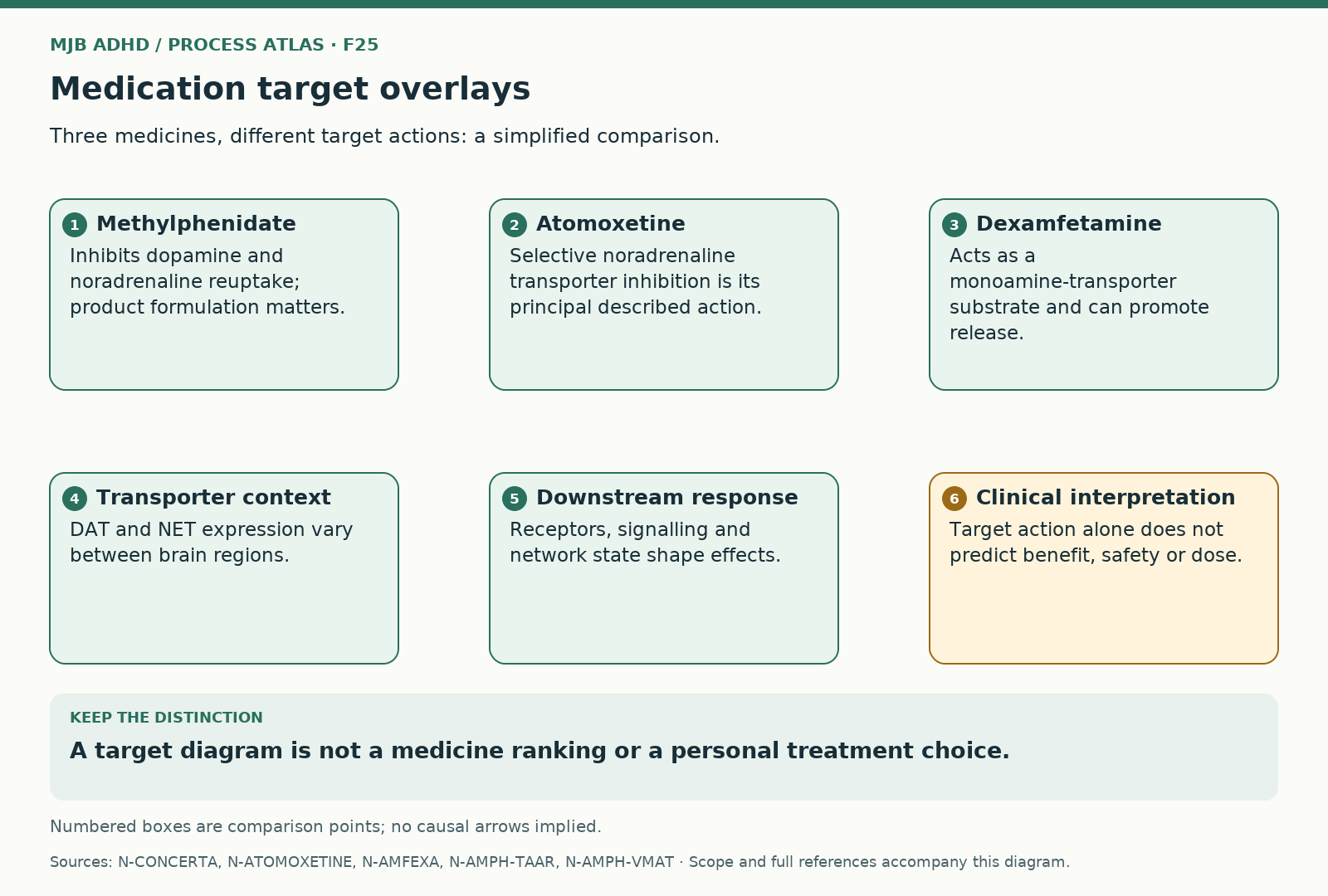
Medication target overlays
Scoped educational mechanism
Open larger diagram · Full-size PNG · Diagram page
Read the diagram explanation and sources
Methylphenidate and atomoxetine principally inhibit reuptake through different target profiles. Dexamfetamine has substrate/releasing actions and additional intracellular effects demonstrated in experimental models. These distinctions do not exhaust the pharmacology or settle how a medicine improves ADHD symptoms. Evidence from cell or animal preparations cannot be read directly as a therapeutic concentration, personal response prediction or dose equivalence. Current product-specific information is linked; an individual prescribing decision remains separate.
3. What your response pattern may be telling you
Helps focus but not initiation
Possible meaning: attention improves once engaged, but the task-starting bottleneck remains.
Ask: is the medication improving concentration without adequately improving activation?
Helps motivation but causes agitation or tension
Possible meaning: activation may be increasing, but the dose or fit may be poor.
Ask: dose, timing, release profile or medication family may need review.
Makes you calmer but not more functional
Possible meaning: regulation improved more than activation.
Ask: is treatment helping emotional steadiness without solving the core executive problem?
Works briefly then drops off
Possible meaning: duration may be wrong, coverage incomplete, or the formulation may not fit.
Ask: about timing, duration, split dosing or alternative release forms.
Causes emotional flattening
Possible meaning: the treatment may be overshooting or reducing spontaneity too much.
Ask: about dose, family, or whether a non-stimulant/stimulant mix discussion is needed.
Helps cognition but worsens sleep
Possible meaning: beneficial overall but mistimed or too activating.
Ask: review schedule, cutoff time and overall sleep strategy.
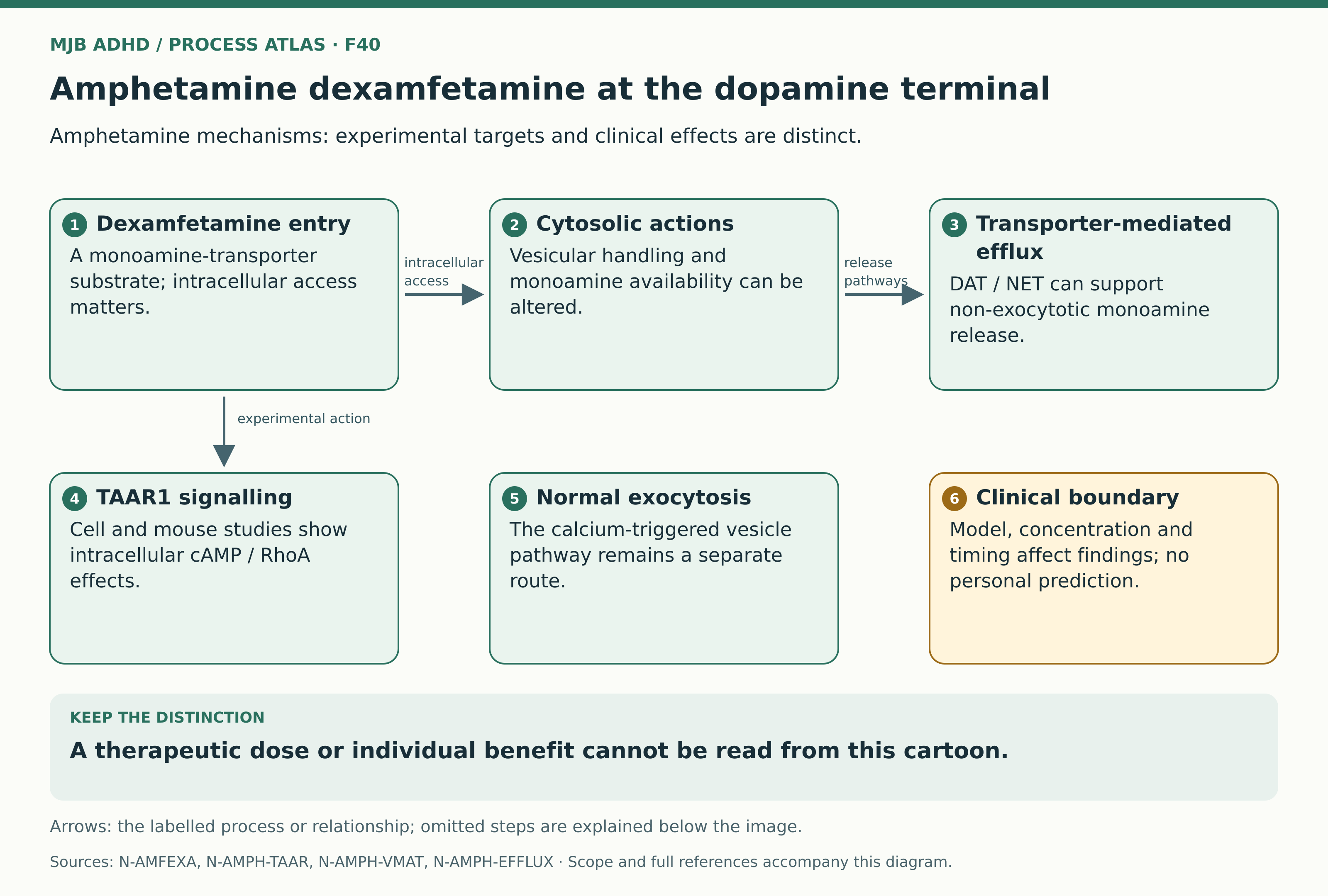
Amphetamine dexamfetamine at the dopamine terminal
Scoped educational mechanism
Open larger diagram · Full-size PNG · Diagram page
Read the diagram explanation and sources
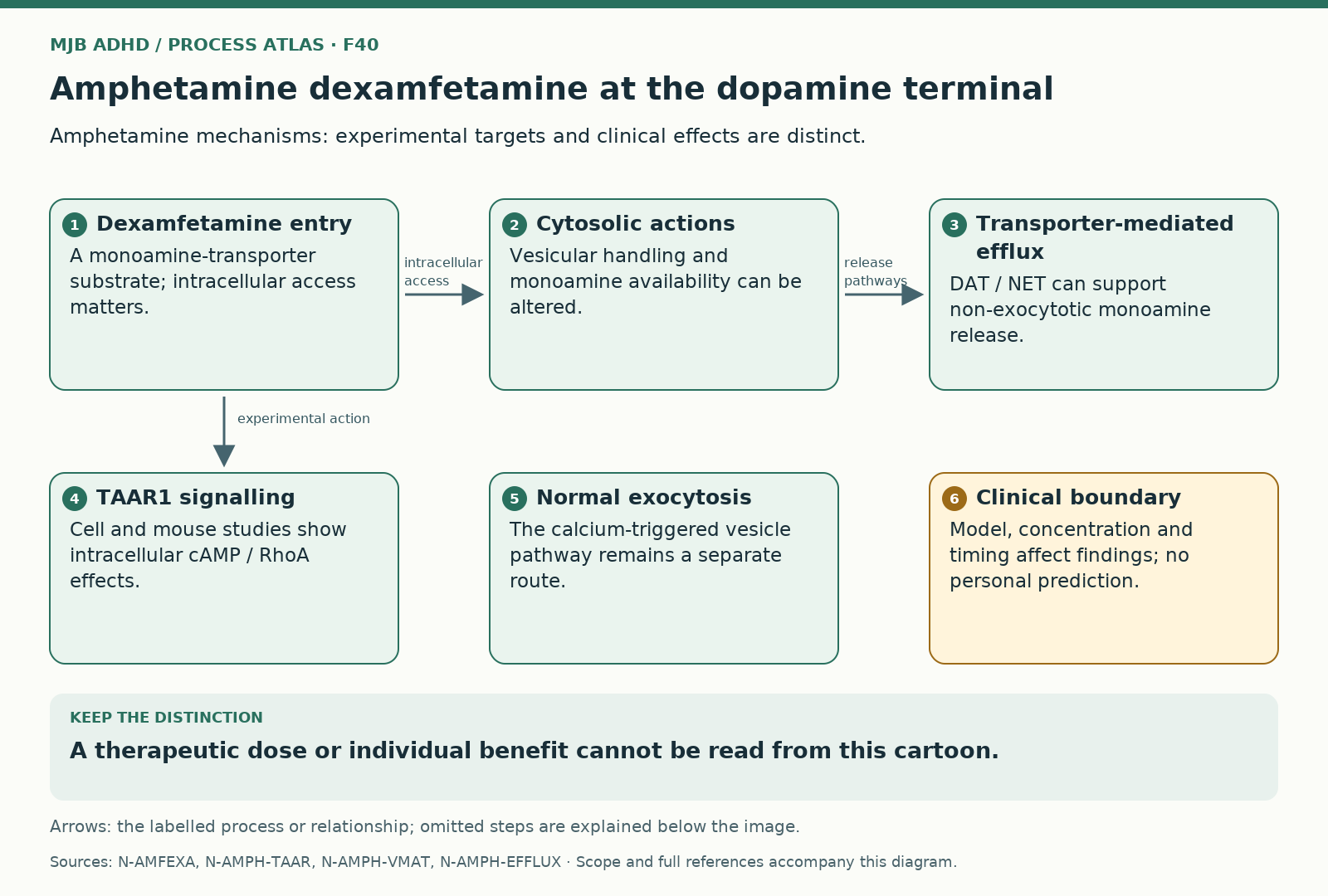
Amphetamine acts as a substrate at monoamine transporters and can alter intracellular monoamine handling and support transporter-mediated efflux. Experimental work also identifies intracellular TAAR1 signalling and transporter trafficking. Vesicular stores affect availability, but knockout-culture evidence shows vesicular transport is not an absolute prerequisite for every experimental amphetamine action. Calcium-triggered exocytosis is therefore kept separate from efflux. Models, concentration and exposure conditions limit translation. The UK dexamfetamine SmPC does not claim a fully settled explanation of behavioural benefit in ADHD. No dose, efficacy, safety or individual mechanism is inferred.
- Dexamfetamine entry → Cytosolic actions: intracellular access
- Cytosolic actions → Transporter-mediated efflux: release pathways
- Dexamfetamine entry → TAAR1 signalling: experimental action
4. Medical cannabis
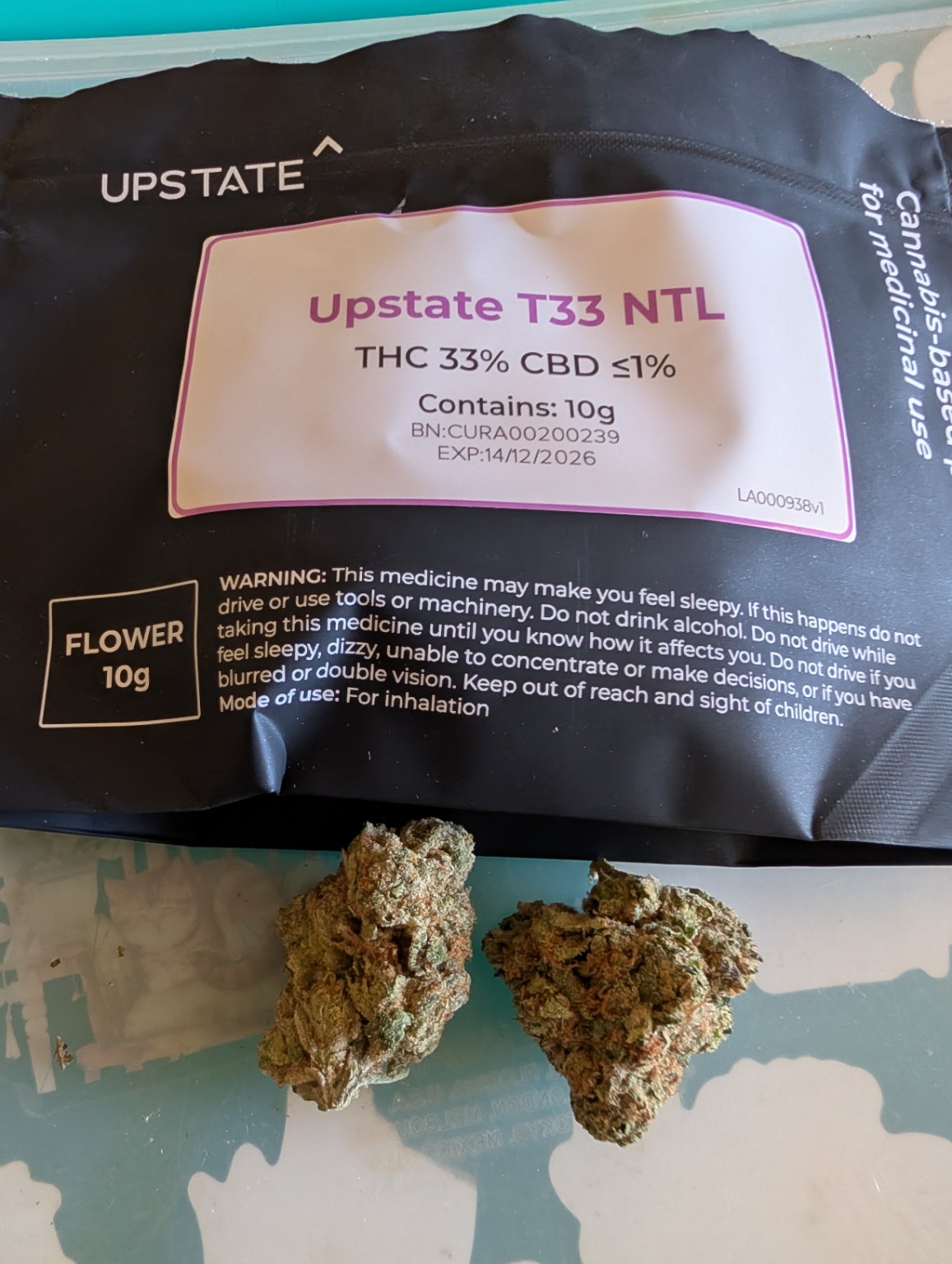
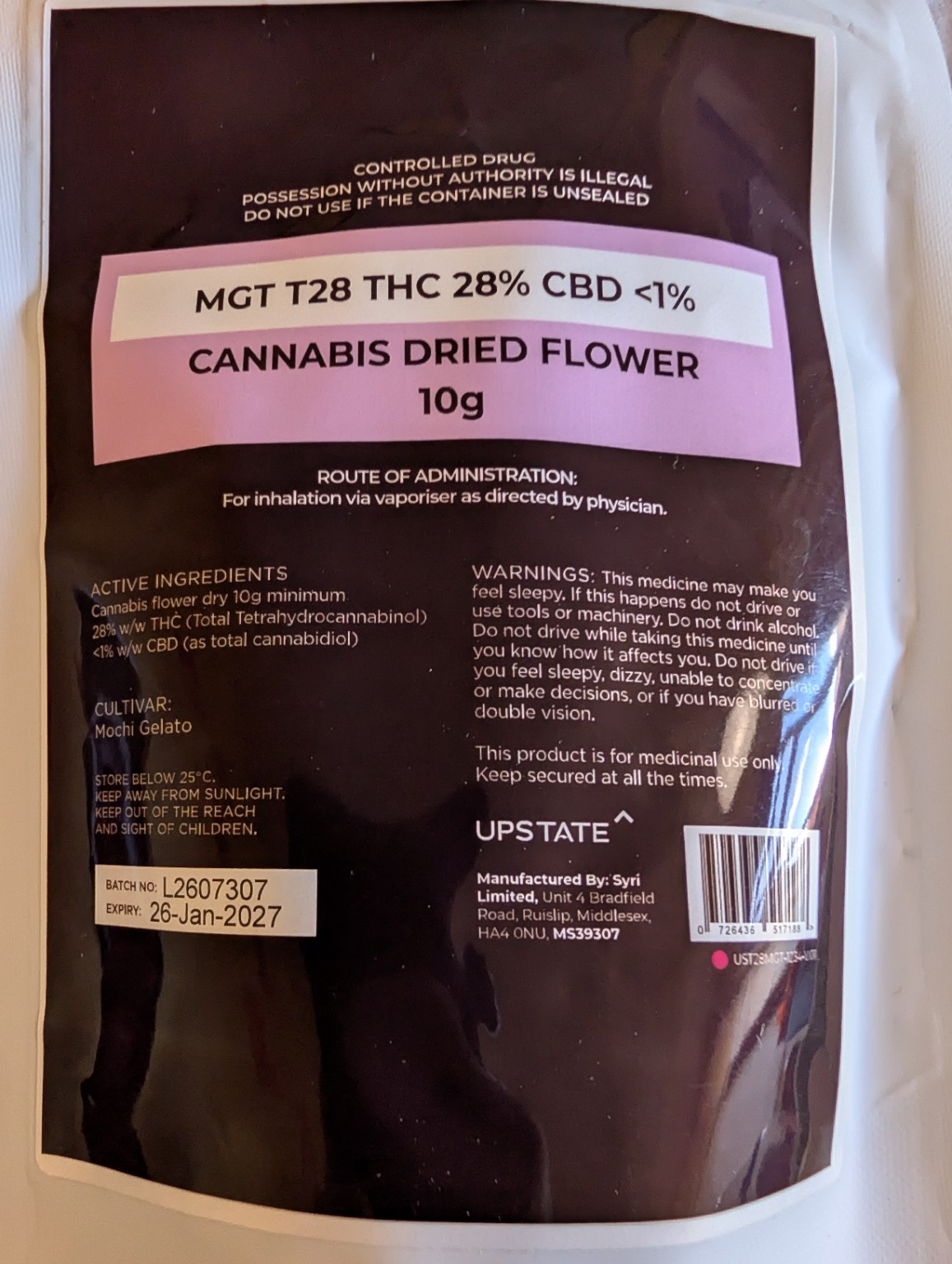
Medical cannabis is available in different forms, including flower and oil. In lived-experience terms, these can feel very different.
Personal recommendation: flower rather than oil, used via dry herb vaporising.
- No rolling required.
- Easier if hands are shaky, dexterity is poor, or executive dysfunction makes preparation harder.
- Avoids combustion.
- Can offer a more direct, controllable practical routine.
- Medical supply can provide more consistency of access and strain profile than informal acquisition.
- Can be especially useful for people who are unwell, housebound or mobility-limited.
This is practical/personal experience, not a clinical trial result and not universal advice.
Safety note. Cannabis is not for everyone. It can worsen anxiety, cognition, motivation or functioning in some people. Sedation, interaction with driving rules and broader legal/prescribing issues all matter.

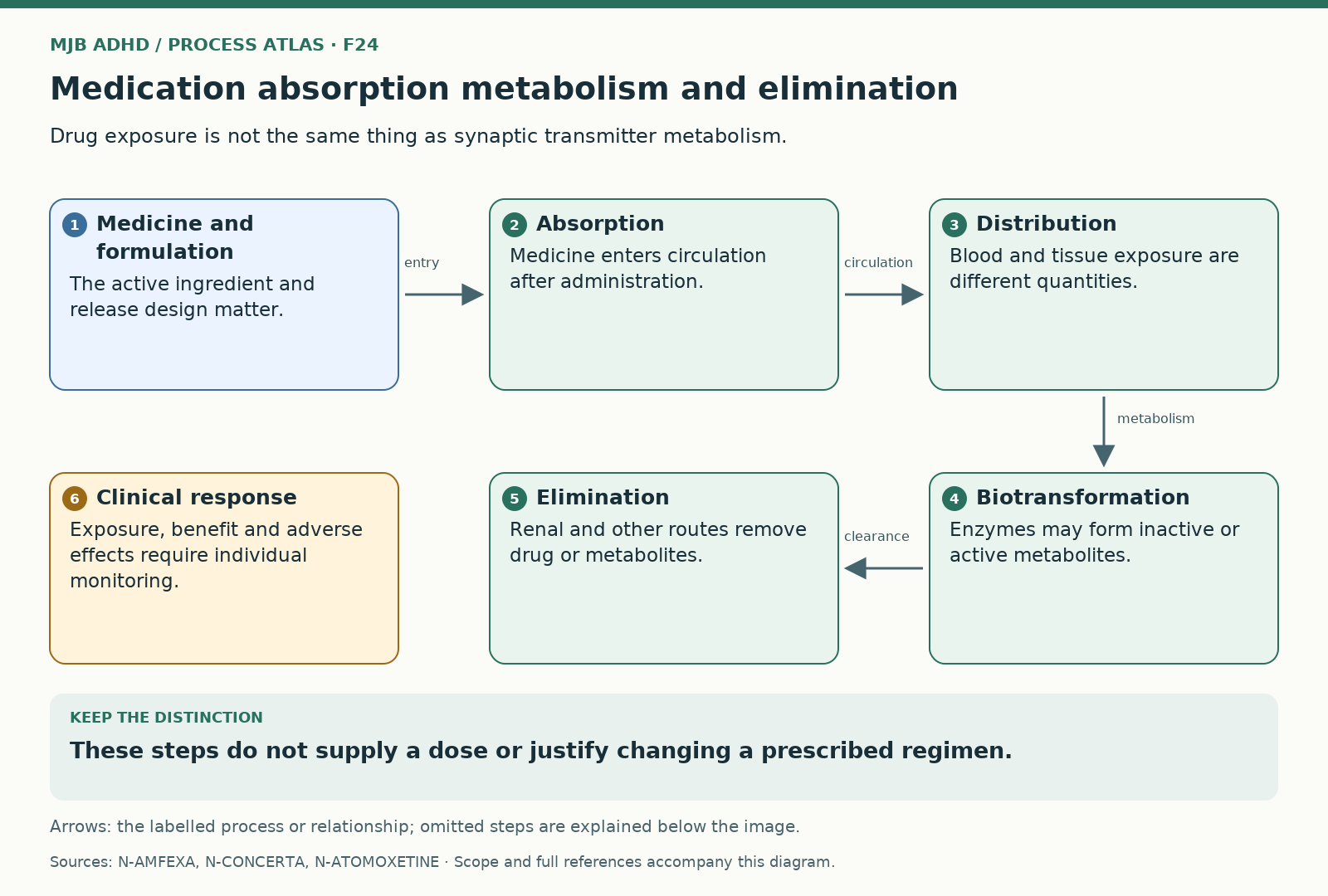
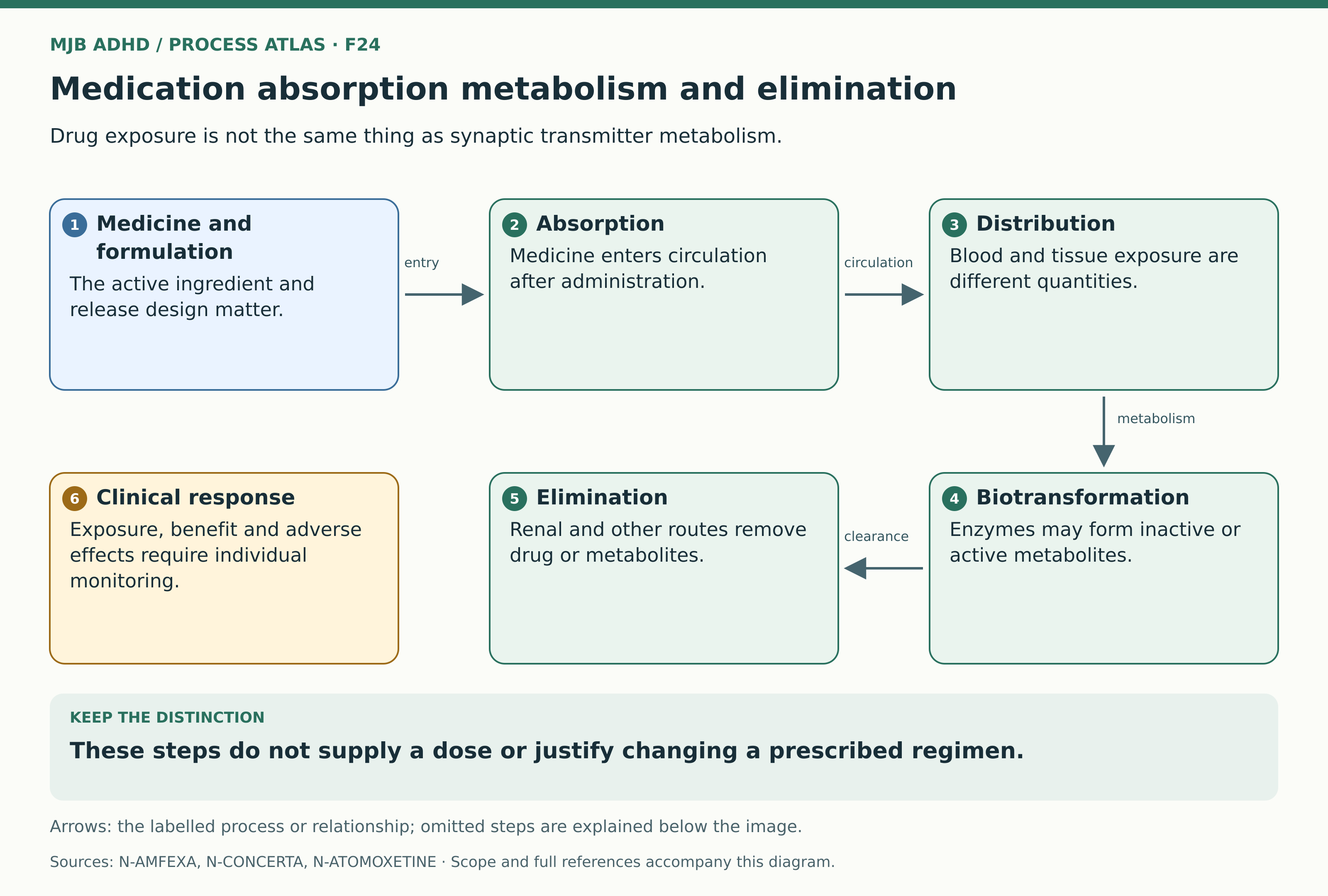
Medication absorption metabolism and elimination
Scoped educational mechanism
Open larger diagram · Full-size PNG · Diagram page
Read the diagram explanation and sources
Absorption, distribution, metabolism and elimination describe pharmacokinetics. They differ between medicines and formulations. For dexamfetamine, the current UK product information describes gastrointestinal absorption, distribution including brain entry, biotransformation and urinary elimination. This general diagram does not specify a concentration, dose or metabolic genotype interpretation. Clinical effect and tolerability require assessment and monitoring; systemic drug handling must not be conflated with MAO/COMT handling of dopamine.
- Medicine and formulation → Absorption: entry
- Absorption → Distribution: circulation
- Distribution → Biotransformation: metabolism
- Biotransformation → Elimination: clearance
5. Potentially useful adjuncts / supplements
| Supplement | Why people consider it | Evidence status | Main cautions |
|---|---|---|---|
| Omega-3 EPA/DHA | Sometimes used for attention, mood and baseline support | Better supported than many supplements, but still variable | Quality varies; benefits may be modest |
| Magnesium | Sometimes used for muscle tension, sleep or general support | Mixed / context-dependent | GI effects; avoid overuse |
| L-Tyrosine | Sits upstream of catecholamine synthesis | Mixed / practical use more common than strong formal evidence | Can interact with some conditions/meds |
| Melatonin | Often used for sleep timing support | Commonly used; practical value can be high | Timing matters; can cause grogginess |
| Creatine | Considered for cellular energy support | Emerging / stronger outside ADHD than inside it | GI effects possible |
| CoQ10 / ubiquinol | Considered for mitochondrial support | Emerging / mechanistic rationale stronger than direct ADHD evidence | Cost, variable benefit |
| PQQ | Considered in energy-support discussions | Early / emerging | Evidence still limited |
| Urolithin A | Considered in mitochondrial-quality-control discussions | Early / emerging | Expensive; limited direct ADHD evidence |
| Lion’s Mane | Used by some for cognition / neuro-support | Mixed and still uncertain | Variable product quality |
| Ashwagandha | Sometimes used for stress or sleep support | Mixed | Sedation, GI effects, thyroid considerations |
| Mucuna pruriens | Contains L-DOPA precursors | Higher-risk / caution | Can meaningfully affect catecholamine biology; not casual-use territory |
| B-vitamins | Useful where deficiency or intake issues are relevant | Context-dependent | Not a universal fix |
Important principle. Supplements are not a substitute for appropriate medical treatment where treatment is indicated. Evidence quality varies widely.
6. Serious warning
ADHD treatment can alter the course of a person’s life for better or worse. Do not assume every service will protect you simply because it says it exists to help.
- Record appointments.
- Save every letter and email.
- Keep copies of prescriptions, refusals, delays and outcome statements.
- Document deterioration, side effects and functional impact.
Different medications can produce radically different outcomes. If a treatment is clearly wrong for you, do not assume that means all treatment will be wrong. Do not settle too early if the result is poor.
Blind trust is dangerous. Administrative pressure, delay or cost considerations may not align with your personal health needs. Protect yourself, keep records, and take treatment decisions seriously.
7. Final warning: this is what being left looks like

This is the amount of pills I have to take without my ADHD medication. Even with all of these, I cannot walk, I have basically no memory or executive function, and low energy and pain compound everything until doing anything at all becomes impossible.
This is the state the NHS can leave you in — and not care in the slightest.
For your own safety: keep all correspondence and expect nothing. You can only rely on family and friends to support you; currently the NHS is not reliable. Too many people die because of people who could not care less.
If you or someone you know is in immediate danger, call 999. Urgent but not an emergency: NHS 111. Samaritans: 116 123.